
Shockwave Therapy in New Iberia
Shockwave therapy is a non-invasive treatment option that uses acoustic waves to deliver mechanical energy to targeted areas of the body. It may be used as part of a broader conservative care plan for certain muscle, tendon, and soft-tissue conditions.
At Theriot Family Chiropractic Center in New Iberia, LA, shockwave therapy may be incorporated into an individualized treatment plan when appropriate. We first consider your symptoms, health history, and examination findings to determine whether this type of therapy is a good fit for you.
What is Shockwave Therapy?
Shockwave therapy, also called extracorporeal shockwave therapy (ESWT), uses acoustic waves delivered through a handheld device to a specific area of the body.
Unlike surgery or injections, shockwave therapy is a non-invasive treatment. The device is applied externally to the area being treated, allowing the therapy to be delivered without breaking the skin.
Shockwave therapy has been studied for a variety of musculoskeletal conditions, particularly certain chronic tendon and soft-tissue problems.
It is not the same thing as electrical stimulation or ultrasound therapy. Instead, it uses mechanical acoustic energy to target a specific area.
What Can Shockwave Therapy Be Used For?
Shockwave therapy may be considered for certain conditions involving muscles, tendons, and other soft tissues.
Depending on the individual patient and clinical findings, it may be used as part of care for conditions such as:
- Tendon-related pain
- Plantar fasciitis
- Certain chronic muscle or soft-tissue conditions
- Persistent areas of localized pain
- Some overuse or repetitive-use injuries
- Certain sports-related injuries
Shockwave therapy isn’t appropriate for every condition or every patient. Your symptoms and examination findings help determine whether it makes sense as part of your care.
How Does Shockwave Therapy Work?
During treatment, a handheld applicator is placed against the skin over the targeted area.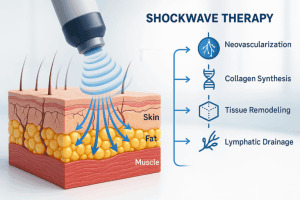
The device delivers controlled acoustic waves into the tissue. Depending on the condition being treated, these mechanical impulses may be used to stimulate a local biological response and support the body’s natural healing processes.
Treatment is generally performed in the office and does not require surgery or an incision.
What does treatment feel like?
You may feel tapping, pressure, or discomfort during treatment. The intensity can generally be adjusted based on your tolerance and the area being treated.
Some patients may experience temporary soreness or sensitivity afterward.
Your provider will discuss what to expect based on the area being treated and the type of therapy being used.
How we Determine if Shockwave Therapy is Right for You
Not every painful area needs shockwave therapy.
Before recommending treatment, we’ll consider:
- Your symptoms and how long you’ve had them
- Your health and medical history
- The location and characteristics of your pain
- Previous treatments you’ve tried
- Your physical examination findings
- Whether your condition is appropriate for shockwave therapy
Our goal is to determine whether shockwave therapy is appropriate for your particular situation, rather than automatically recommending the same treatment for everyone.
If another type of care or medical evaluation would be more appropriate, we’ll help you determine the next step.
Frequently Asked Questions About Shockwave Therapy
Is shockwave therapy painful?
You may experience some discomfort during treatment, particularly when treating a sensitive or painful area. The intensity can generally be adjusted based on your tolerance.
Some temporary soreness or tenderness after treatment is also possible.
How long does a shockwave therapy treatment take?
Treatment time varies depending on the condition and area being treated. Your provider can explain what to expect during your appointment. Typical treatment time varies from 8-21 minutes.
How many shockwave therapy treatments will I need?
There isn’t one treatment schedule that works for everyone. The number and frequency of treatments depend on the condition being treated, how long you’ve experienced symptoms, and how you respond to care.
Your treatment plan will be individualized rather than based on a guaranteed number of visits.
What conditions can shockwave therapy treat?
Shockwave therapy has been studied for a number of musculoskeletal conditions, particularly certain tendon and soft-tissue problems. Whether it is appropriate depends on your specific diagnosis or presentation.
Is shockwave therapy the same as electrical stimulation?
No. Shockwave therapy uses mechanical acoustic waves, while electrical stimulation uses electrical impulses delivered through electrodes.
They are different treatment modalities.
Is shockwave therapy the same as ultrasound?
No. Although both treatments use energy delivered through a device, shockwave therapy uses focused or radial acoustic pressure waves with substantially different characteristics from therapeutic ultrasound.
Can I have shockwave therapy if I’m already receiving chiropractic care?
Potentially. Shockwave therapy can sometimes be incorporated into a broader conservative care plan when appropriate.
Your provider will determine whether combining treatments makes sense for your particular condition.
What should I expect after treatment?
Some people experience temporary soreness, tenderness, or sensitivity in the treated area. Your provider will discuss any activity recommendations or precautions relevant to your treatment.
Is shockwave therapy appropriate for everyone?
No. Certain medical conditions, medications, or other circumstances may make shockwave therapy inappropriate or require additional medical evaluation first.
That’s why an evaluation is important before beginning treatment.
Office Hours